
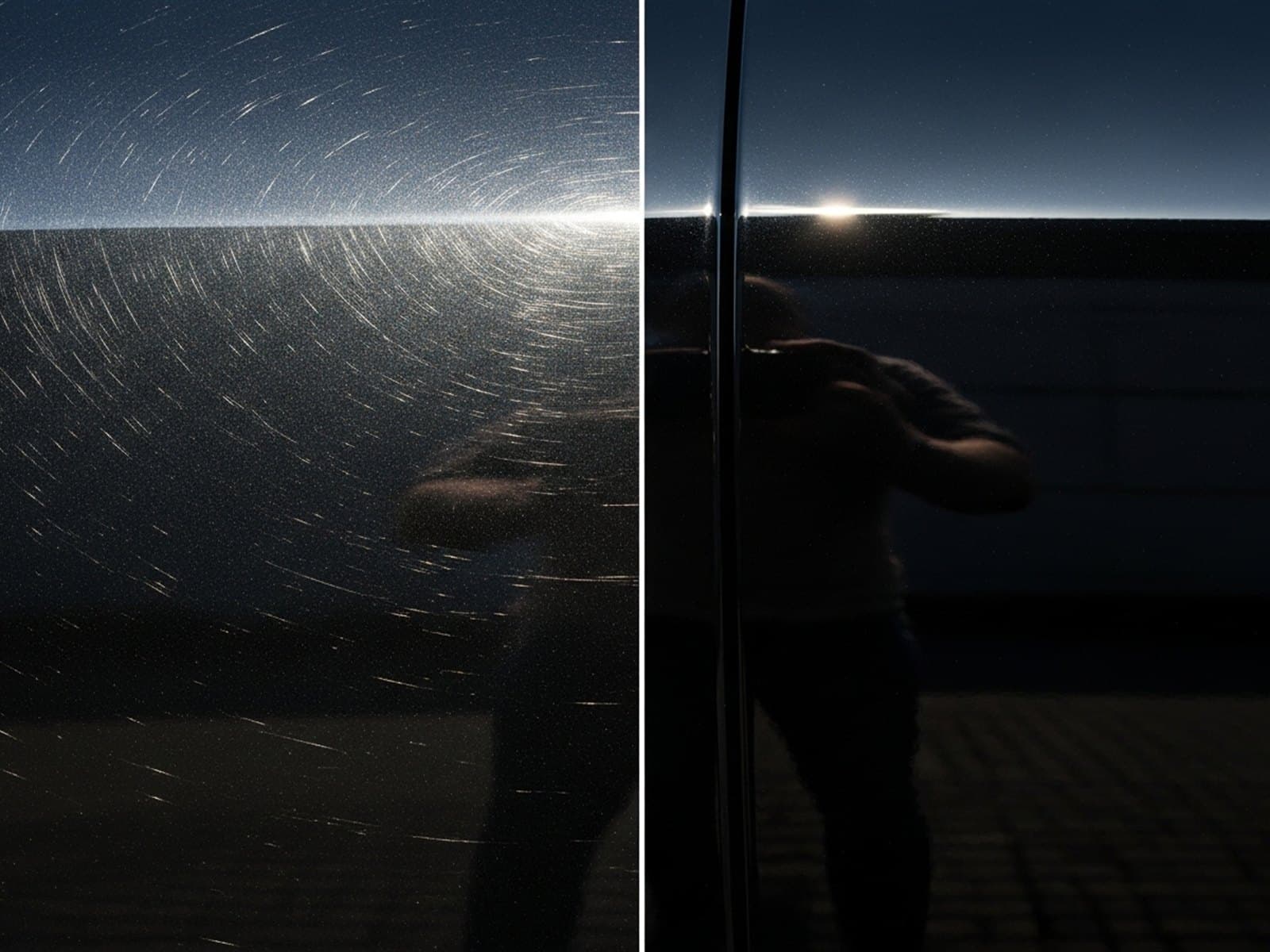
Why two steps can make a bigger difference
Heavier swirl marks, oxidation, haze, and scratches may not move enough with a lighter polish. The first stage uses a stronger combination to cut those defects down. That can leave some haze of its own, especially on softer paint. The second stage cleans that up and brings the gloss back.
It means we are going around the vehicle twice, plus all the washing, decontamination, taping, test spots, wipe downs, inspection, and protection around it. That's why this is a much bigger job than the name makes it sound like.
We still have to know when to stop
Two steps doesn't mean unlimited correction. If a scratch is too deep or the paint is thin, we leave it. If an edge looks risky, we don't burn through it just to get a dramatic before-and-after picture.
Sometimes a one-step test gets the car where the owner wants it. If that's the case, we'll tell you. The second step should earn its place on the job.
Plan on protecting it when we're done
Once the paint is corrected, it needs protection and a better wash routine. Putting it right back through the same tunnel wash is how you start building the swirls again.
A ceramic coating is a popular choice after this much correction, but it isn't the only choice. We can talk through the options.
Related services
Questions we hear about Two-Step Paint Correction
How long does two-step correction take?
It depends on the size, paint, and defects. When we combine full correction, prep, and ceramic coating, a job can reach ten or eleven hours.
Will it make the paint perfect?
It can make a huge change, but perfect is not a word we promise. Deep damage, paint history, and safe clear-coat limits still matter.
Can you quote it from photos?
Photos help us give you a direction. The real answer comes from seeing the paint under the shop lights and testing a section.